Publication Date: Sep 14, 2026
Adjusting the pressing pressure of the rock wool sandwich panel machine starts with inspecting equipment operation status first. Fine-tune the pressure control knob gradually based on panel forming conditions. Test sample panels repeatedly to avoid insufficient compaction or surface deformation. Calibrate pressure regularly to keep stable processing quality and normal machine operation.
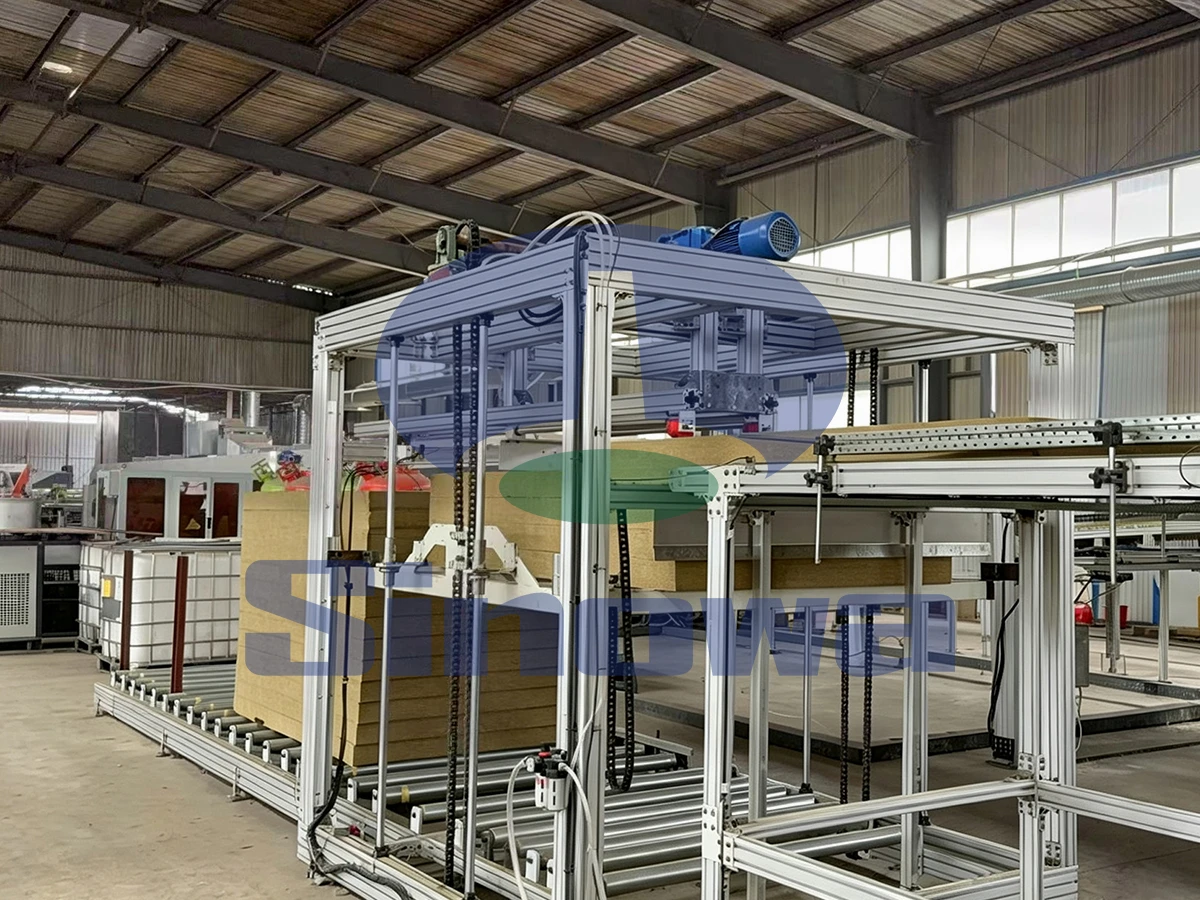
Pressing pressure serves as the core parameter that bonds rock wool core materials and outer metal skins closely during panel production. Reasonable pressure eliminates gaps between layers and ensures uniform surface compactness of finished panels. Insufficient pressure causes loose lamination and easy delamination, while excessive pressure crushes rock wool fiber structures, damaging the insulation and structural performance of panels.
Complete a full pre-adjustment inspection to guarantee accurate and safe pressure regulation. First, check the cleanliness of pressing belts and platens to remove residual debris and adhesive that may affect pressure uniformity. Then verify the normal operation of hydraulic and pneumatic systems, ensuring no air leakage, oil leakage or component jamming. Finally, confirm the machine is in static standby mode to avoid operational risks during adjustment.
Different rock wool core materials and outer skin specifications require matched pressing pressure. Thicker rock wool cores with dense fiber structures need relatively higher pressure for full lamination, while thin and lightweight rock wool materials demand lower pressure to prevent permanent fiber compression. Rigid outer skins can bear slightly higher pressure, while flexible skins need mild pressure to avoid surface deformation.
Familiarize yourself with the machine’s key pressure regulation parts before formal adjustment. Most rock wool sandwich panel machines are equipped with adjustable pressure regulators, real-time pressure sensors and PLC control interfaces. The mechanical adjustment knob controls basic pressure range, while the electronic control panel allows precise digital setting and real-time pressure data monitoring for intuitive parameter modification.
Start adjustment by setting a safe baseline pressure suitable for conventional panel production. Operate the control panel to input preliminary pressure values based on current material specifications, and avoid extreme high or low pressure settings at the initial stage. After setting, activate the idle pressing test to check if the machine’s pressure output is stable and whether the sensor data matches the set baseline value.
Precise tuning must be carried out in small increments instead of one-time large adjustments. Increase or decrease the pressure slightly at intervals, and run short trial production after each adjustment. This gradual operation effectively prevents sudden pressure changes from damaging rock wool fibers or causing uneven lamination, helping find the optimal pressure state steadily.
Overall pressure value qualification does not guarantee uniform force on the entire panel. After preliminary adjustment, detect the pressing force at multiple points including the middle and both sides of the pressing platform. Correct local pressure deviation timely by fine-tuning the unilateral regulating valve to ensure consistent stress on all parts of the panel and avoid partial bulging or delamination defects.
Pressing pressure needs to coordinate with the machine’s operating speed to adapt to continuous production. At a faster production speed, appropriately increase pressure to ensure sufficient lamination time and bonding force. At a slower speed, reduce pressure moderately to prevent excessive compression on rock wool cores caused by prolonged pressing contact.
Evaluate the rationality of pressure parameters through finished product inspection. Qualified panels feature flat surfaces, no gaps between layers, uniform thickness and intact rock wool fiber structure. If delamination occurs, raise the pressure slightly; if panel thickness is uneven or rock wool is crushed, lower the pressure and re-tune until product quality meets production requirements.
After confirming the optimal pressing pressure for specific materials and production conditions, record the parameter data completely in the machine’s control system and production log. Fixed parameter settings reduce repeated debugging time for subsequent batch production. Regularly check and calibrate parameters to offset minor pressure drift caused by long-term machine operation.
Keyword: Rock Wool Sandwich Panel Machine
Precision Engineering · Intelligent Manufacturing · Optimized Investment
Any Questins About Continuous Sandwich Panel Production Lines
Email us with inquiries or use our contact infomations