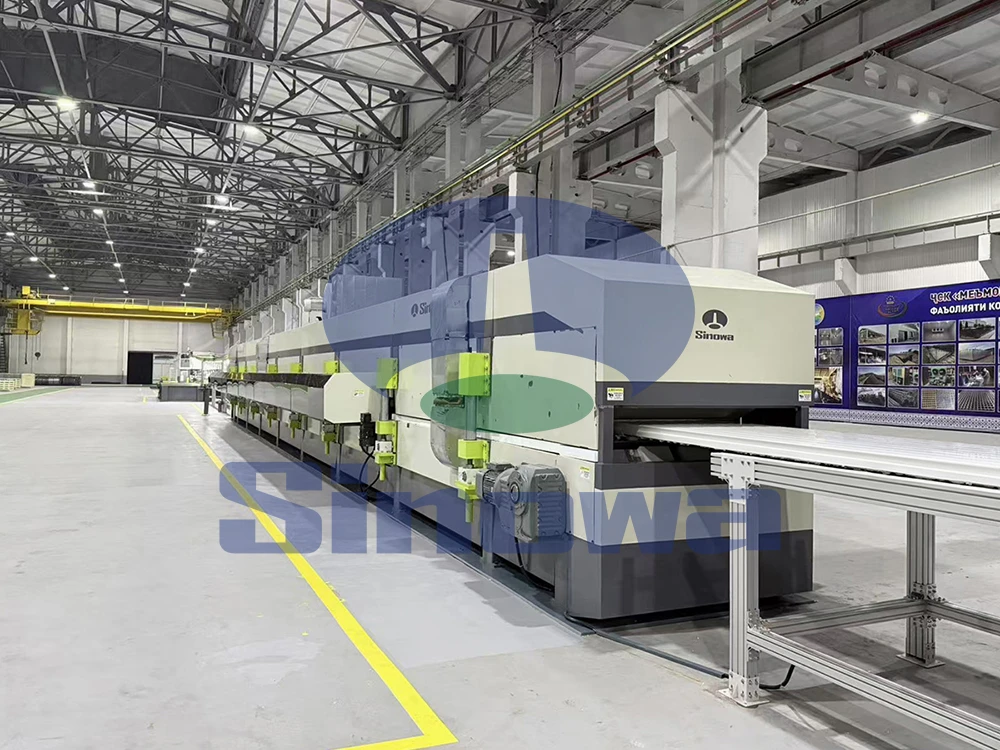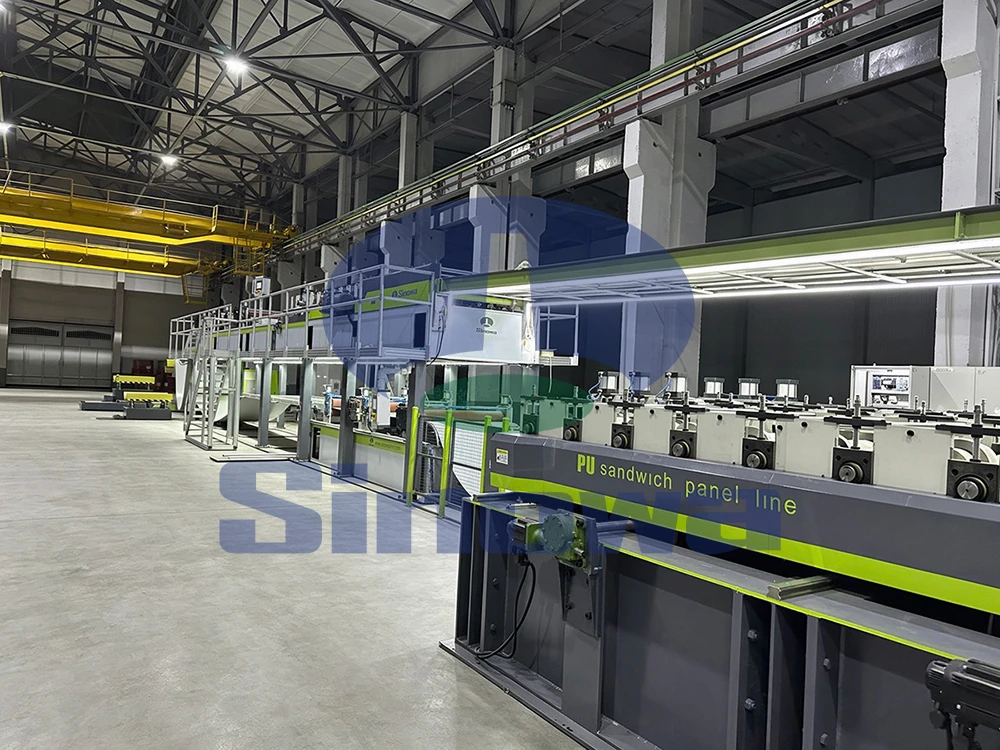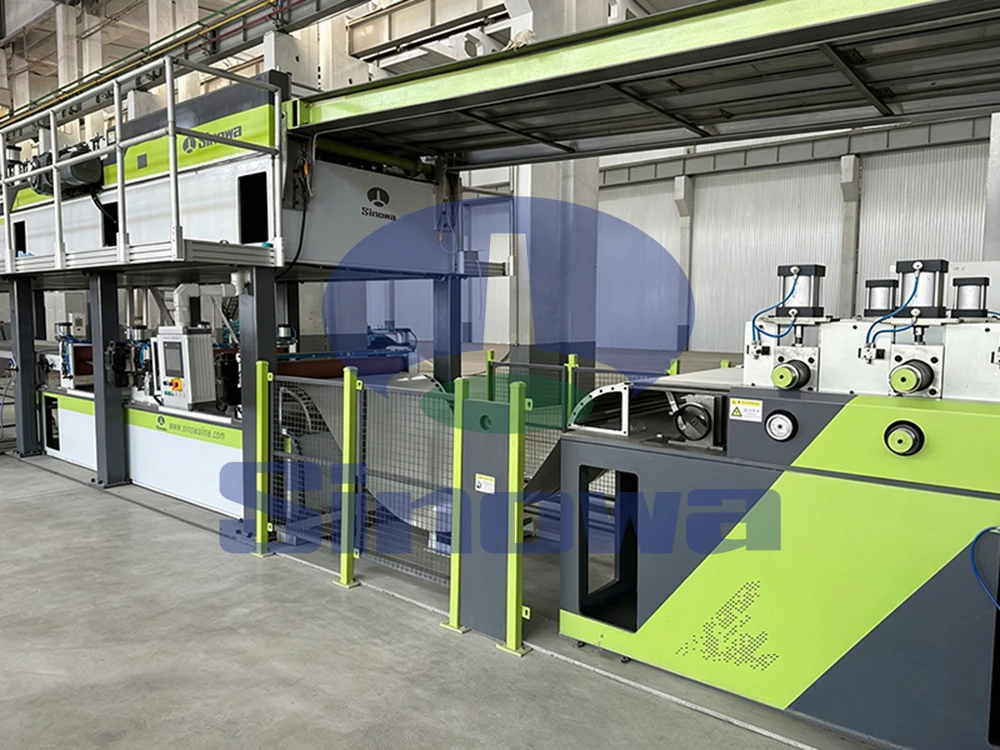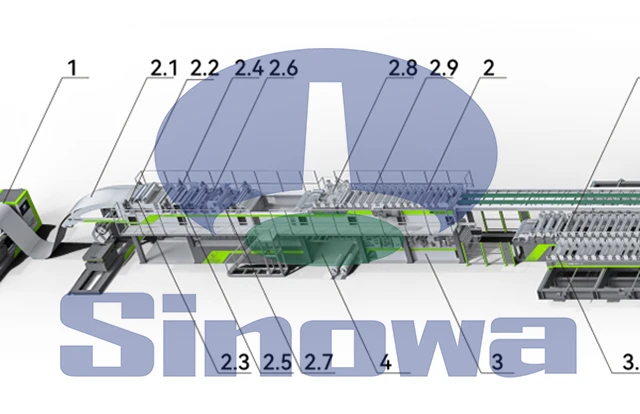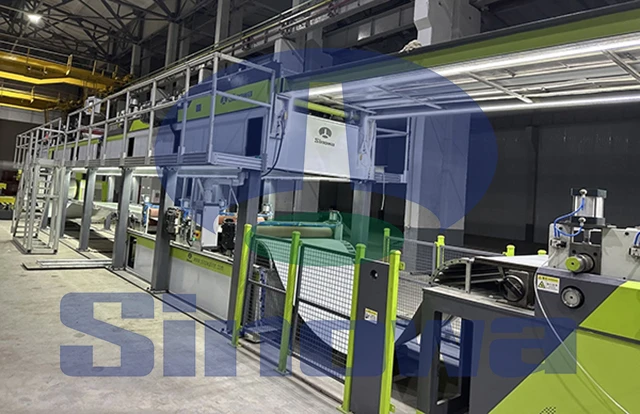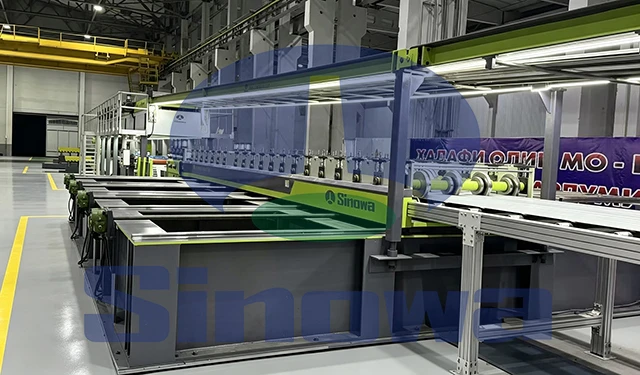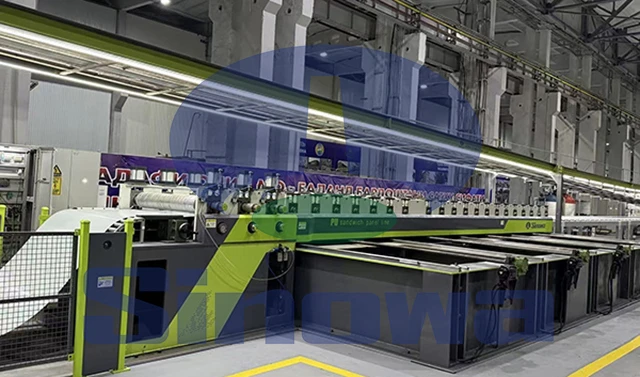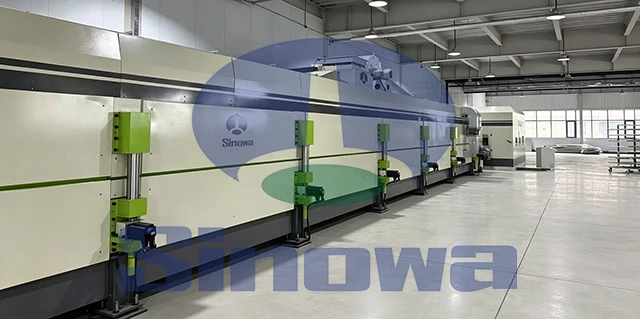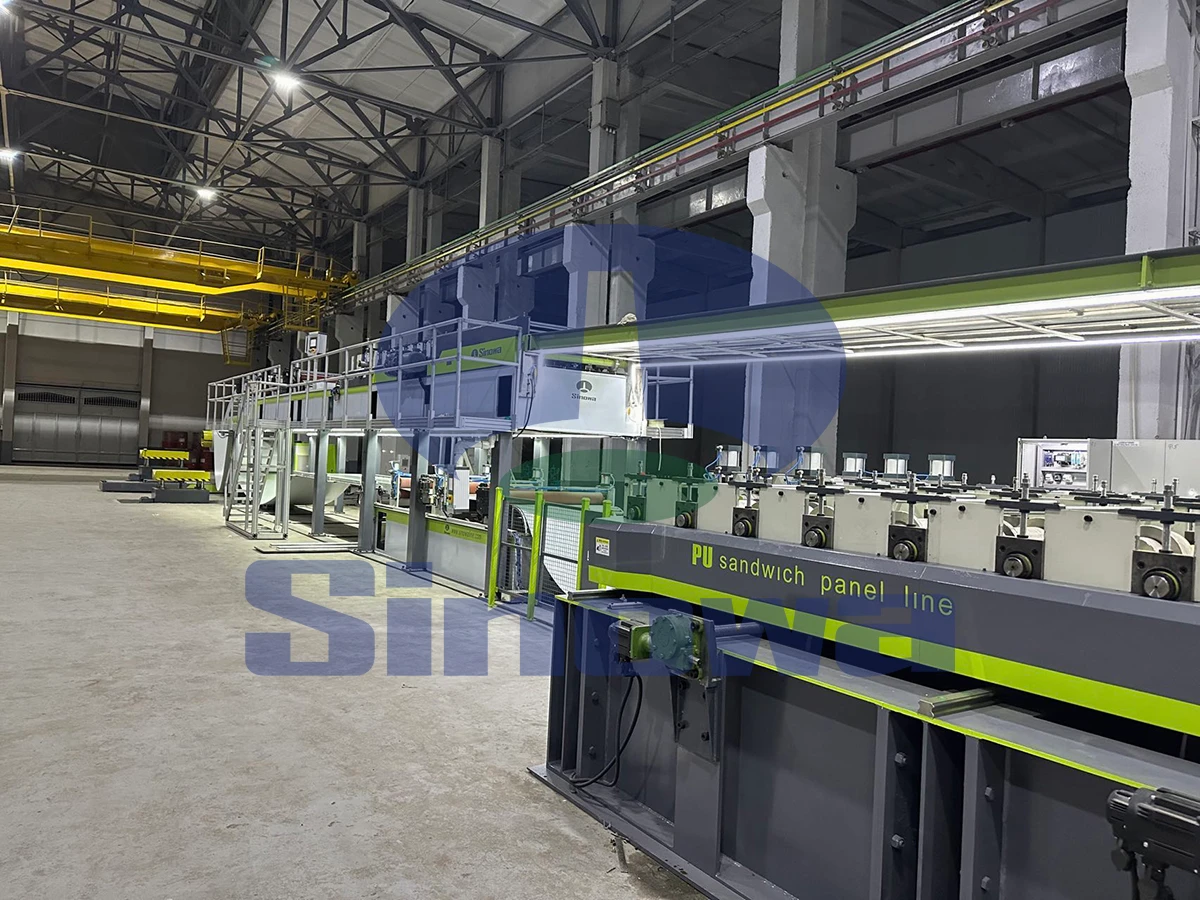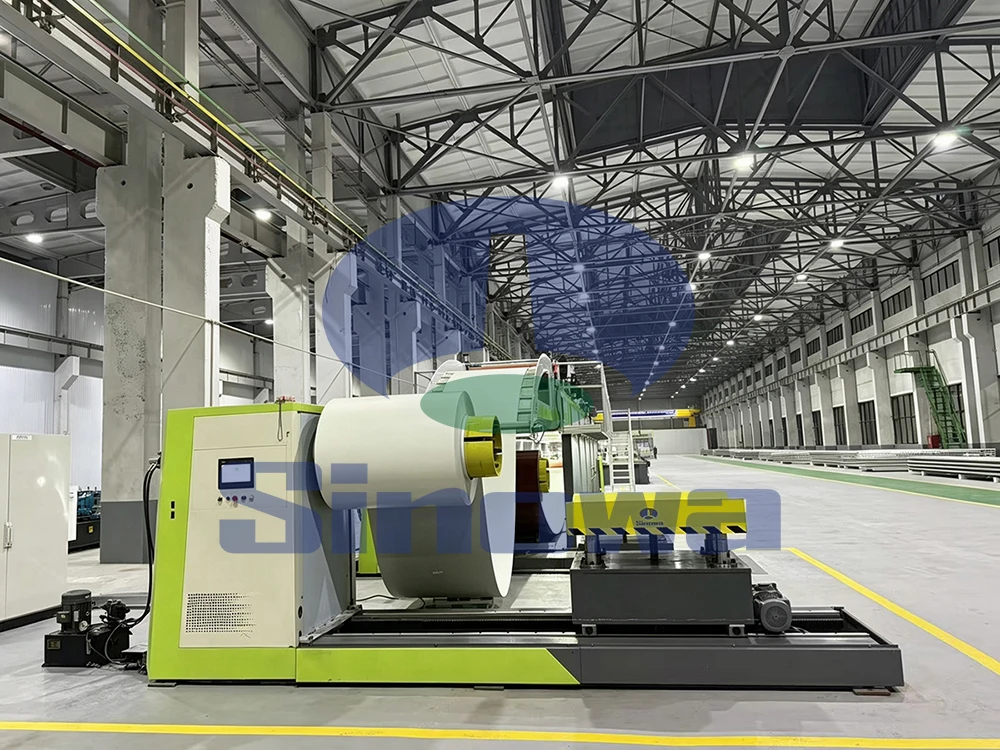
Sinowa specializes in the R&D of high-end, high-efficiency sandwich panel production lines. Our sandwich panel machines achieve comprehensive leadership in production efficiency, automation level, HMI human-machine interface, environmental performance and energy consumption. Breakthrough, disruptive designs have been developed for key technical areas, delivering outstanding cost performance and an intuitive, user-friendly operating experience for the whole line. Powered by system integration and bus control technology, the line achieves fully automatic coordinated control across all processes, with support for remote interactive communication. Boasting world-class performance, it stands as one of the most capable high-performance sandwich panel production solutions available on the global market.
Fueled by continuous technical innovation, Sinowa’s continuous PU/PIR sandwich panel production line delivers reliable, high-value industrial output for manufacturers worldwide. Backed by Chinese mature industrial supply chain advantages and our dedication to technical excellence, our production lines offer world-beating value for money. Built around a modular design philosophy, all components can be freely integrated and reconfigured. The line features excellent versatility, supporting production of PU, PIR and rock wool sandwich panels, and readily accommodates diverse production requirements from customers across different sectors.
Our intelligent production line enables fast reconfiguration and simple switching to automate manufacturing of roof, wall and cold storage sandwich panels, among other variants. It works seamlessly with core materials including polyurethane, rock wool and glass wool. We offer custom equipment design and a wide range of configuration options to match unique client requirements. Paired with a flexible pricing structure, we create bespoke solutions that align with different production capacities and budget targets.
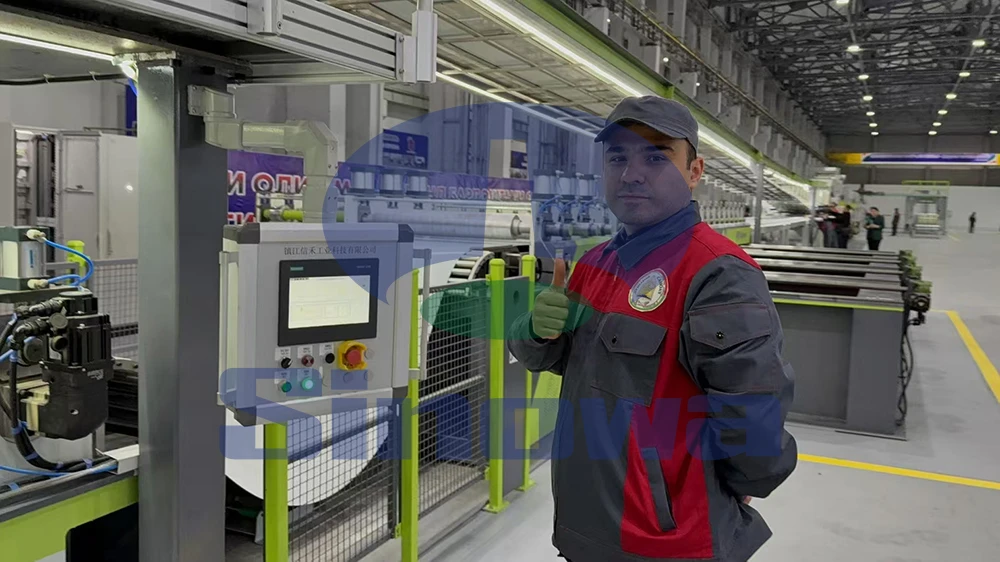
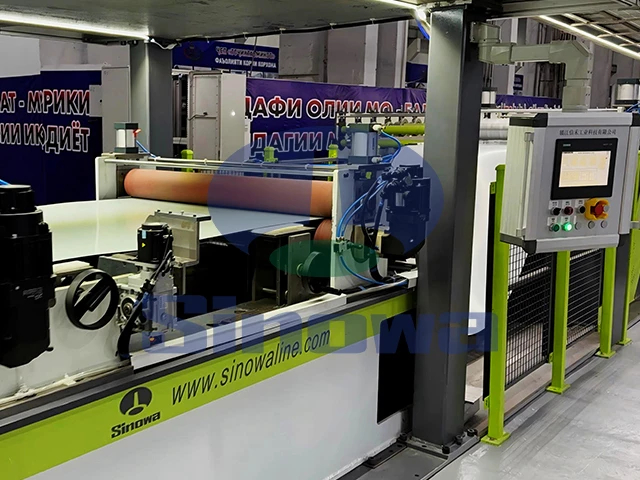
The production line adopts a tightly integrated linked control system that consolidates all control points onto a central main console. It enables synchronized parameter adjustment, full-line automatic fault diagnosis and precise travel distance control, achieving centralized process management. All motion controls for line components are unified within a single process station, with remote communication capability. This advanced automation reduces required on-site operators, streamlines workflows and substantially lowers your long-term labor expenses.
Every section of the production line follows strict modular engineering to maximize part interchangeability, cutting both operational costs and energy use. All critical components are precision-machined in machining centers with no manual joining work. After inspection and warehousing, parts move directly to assembly. Modular assembly not only boosts manufacturing efficiency but also enables shorter lead times for delivery. Most importantly, it improves overall equipment reliability and minimizes quality variations caused by human error.
The main machine uses a precision servo lifting mechanism and eliminates the traditional hydraulic system. Panel thickness can be adjusted quickly and conveniently, removing common headaches like hydraulic tuning issues, oil leaks and routine maintenance work. Thoughtful energy-saving and thermal protection design allows stable non-stop operation 24/7 all year round, slashing your operational expenditure. An independent insulated heating chamber is built into the system. With a fully sealed internal insulation structure, energy use is kept to a minimum. The insulation system can heat from ambient temperature above 5°C up to production temperature in less than one hour, consuming only 40% of the energy required by comparable production lines.
Sinowa production lines are developed according to modern industrial equipment design principles, integrating precision manufacturing, modular engineering, automated control and energy-saving technologies. Particular emphasis is placed on simple and highly automated operation, thereby reducing dependence on operator experience and skill.
We provide more than production-line equipment. Sinowa delivers a complete insulated-panel manufacturing solution, including:
Sinowa integrates the core machines of the line into coordinated equipment modules wherever possible, allowing the key production systems to be engineered and manufactured as an integrated whole. This approach gives the Sinowa line a number of distinctive technical advantages.
The modular design ensures consistent alignment of the upper and lower facings throughout the sandwich-panel line. The sheets enter the double-belt laminator automatically in accordance with the preset alignment, significantly simplifying operation and potentially eliminating more than 90% of routine alignment adjustments.
Installation and operation of the production line no longer depend heavily on individual skills and experience. With short-term training by Sinowa technicians and operation according to established procedures and recommendations, customers can achieve normal panel production without necessarily recruiting a highly experienced technical manager and building an operator team around that individual, thereby reducing unnecessary management concerns and operational complexity.
The modular design allows the equipment to be disassembled into transportable modules, greatly reducing the number of containers required and lowering international freight costs. Compared with production lines of similar configuration, Sinowa can reduce container quantity and international freight cost by at least 50%, which is highly significant for lowering the overall investment budget of overseas projects.
On-site installation and commissioning are more accurate and efficient. The equipment can be assembled sequentially in accordance with the drawings and prescribed installation procedure. Once mechanical installation is completed, repeated mechanical adjustment is generally unnecessary; after inspection, start-up commissioning and trial production can normally begin within 1–2 days.
The modular concept enables most components to be precision CNC-machined and assembled as standardized modules. Assembly positions are fixed by design, minimizing human error and reducing on-site adjustment deviations.
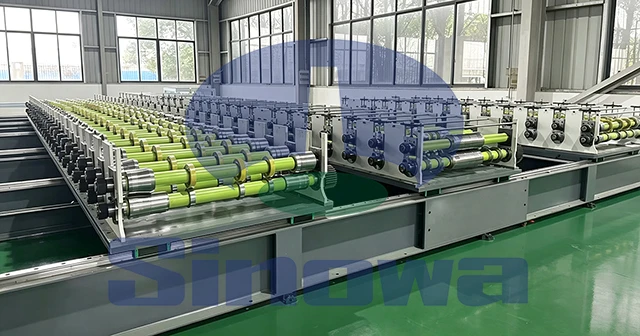
Sinowa adopts a precision modular production changeover system. The base frame is assembled from CNC precision-machined components and integrated with linear guideways, precision self-locking lead screws, the main drive system, servo motors for changeover positioning, and different roll-forming systems. When changing product type—for example, from roof panels to wall panels—the operator simply selects the required forming system on the HMI. The corresponding system automatically moves to the precise working position, with positioning accuracy comparable to a CNC machine-tool table, and then automatically locks in place. Manual movement and experience-based positioning are not required.
The combination of linear guideways, precision lead screws and servo control ensures highly accurate movement and positioning of the roll-forming system and maintains the sheet exit direction consistently aligned or parallel with the centerline of the double-belt laminator. Additional inspection and realignment after each changeover are therefore minimized.
The forming roller stations of the different roll-forming systems use gear transmission, improving transmission accuracy and allowing multiple forming systems to share one integrated main drive. Sinowa’s dedicated engagement/disengagement design enables the selected forming system to connect to or disconnect from the main drive automatically during changeover, reducing installed power, maintenance requirements and installation space while simplifying the control program.
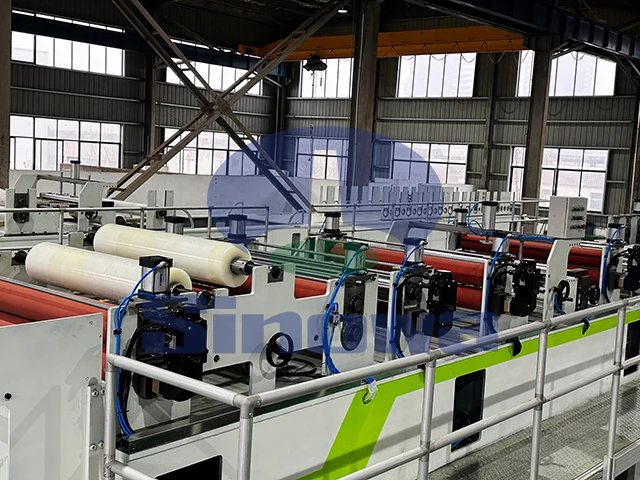
Each Sinowa roll-forming system is equipped with a precision modular mounting base. Every roller station is accurately installed on the base, which is connected to the linear-guide carriage and drive screw for precise lateral movement and positioning. In addition to maintaining forming accuracy, this design allows new panel profiles to be added in the future by replacing or adding roller stations rather than replacing major equipment, saving both investment and modification time.
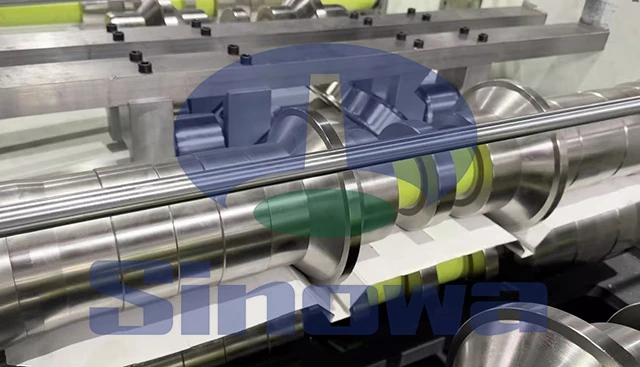
Unless a special application requires otherwise, Sinowa generally uses through-shaft roll-forming designs for greater strength and stability, particularly when processing thicker or higher-strength stainless steel. Polyurethane-coated wheels can also be installed on the through shafts to grip the flat sheet surface more effectively and reduce arching or unevenness.
The gap of the auxiliary side-forming roller assemblies is adjusted by rotating eccentric shafts, providing more precise and stable adjustment than conventional methods based on manually repositioning roller assemblies in slotted holes.
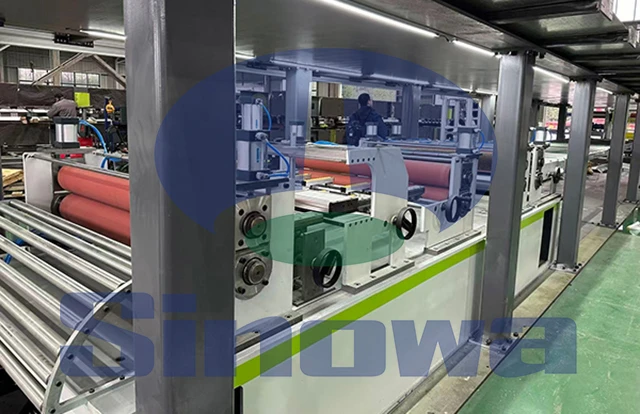
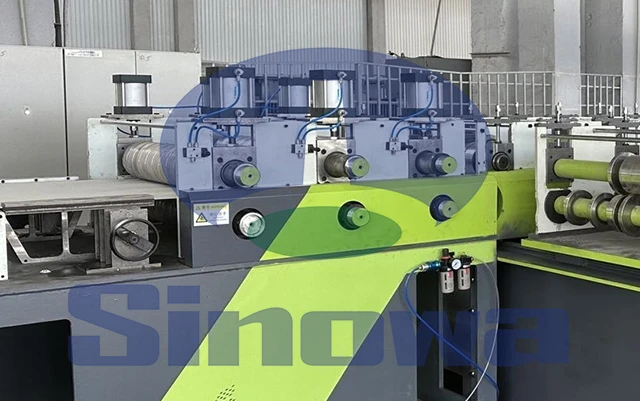
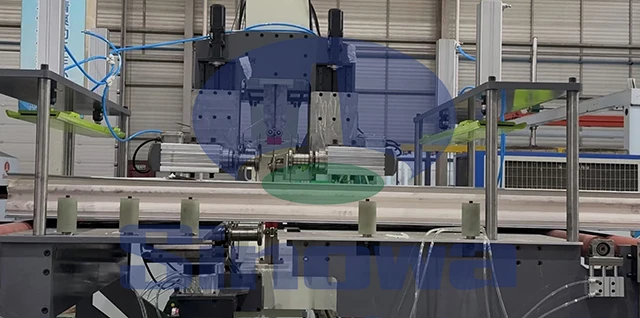
The embossing unit of the Sinowa roll-forming machine is also a key component of the system’s optimized modular design. The embossing rollers are manufactured from high-quality alloy steel and precisely engineered and CNC-machined to ensure accurate and consistent alignment between the upper and lower rollers at all times. The embossing depth is conveniently controlled by adjusting the pneumatic cylinder pressure, while the pneumatic system provides uniform pressure distribution and automatic pressure balancing, ensuring excellent and consistent embossing results. The system is simple, reliable and convenient to operate, while eliminating the complexity, noise and potential oil leakage and contamination associated with conventional hydraulic systems.
Through continuous development and testing, Sinowa has created an integrated thermal-insulation and energy-saving concept that can substantially reduce energy consumption and installed electrical power, thereby lowering the required capacity of the customer’s factory power supply.
The preheating system is integrated with the chemical laydown platform and uses a relatively enclosed hot-air circulation arrangement positioned close to the foam dispensing area. This significantly improves preheating efficiency, while heating power is only about 12 kW, compared with approximately 60 kW or more for many conventional systems located farther from the dispensing area.
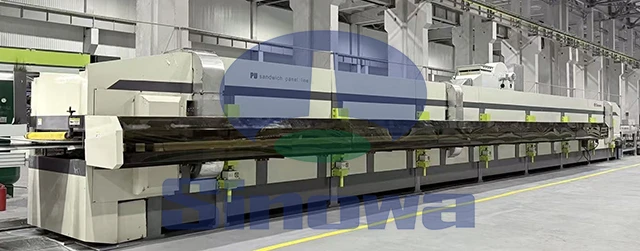
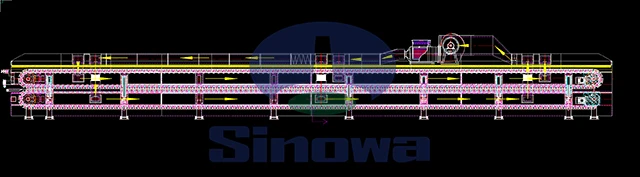
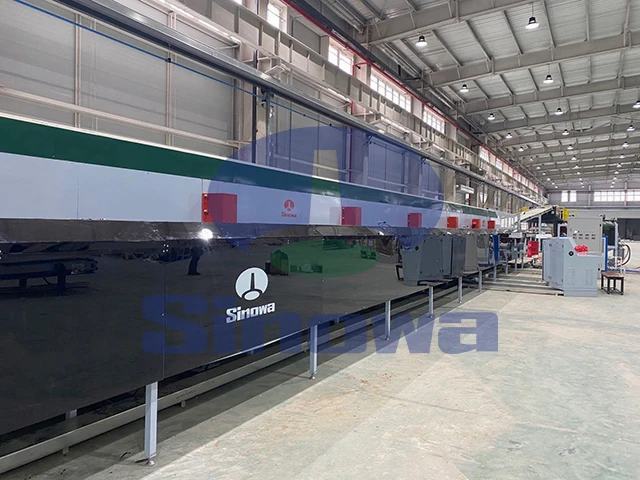
With optimized insulation and a unique internal circulating-heating system, the 30 m double-belt laminator requires no more than approximately 180 kW of heating power, substantially lower than comparable systems that may require more than 400 kW.
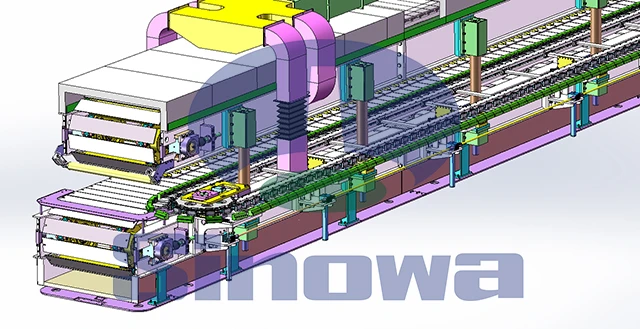
With sealed and insulated construction, hot air is delivered from the rear through insulated ducts progressively toward the front of the double-belt laminator, while the circulation fans draw return air from the rear. This creates a closed-loop heating field around the chain plates. Dampers allow the temperature of individual zones and the upper/lower platens to be balanced, and different internal temperature profiles can be established to suit the polyurethane foaming process, typically with a gradually decreasing temperature toward the outlet.
Based on the above thermal design, the Sinowa line does not require a separate insulated heating enclosure around the laminator. This creates a more comfortable working environment for operators and makes maintenance, side-block replacement, vehicle access and the use of auxiliary tools more convenient.
Sinowa employs a servo-driven precision screw lifting system to accurately adjust and control the distance between the upper and lower chain platens. The system is also equipped with high-precision position sensors, providing precise closed-loop control of the laminating gap and, consequently, the finished panel thickness. Compared with the hydraulic lifting systems commonly used on other production lines, Sinowa’s servo-controlled mechanical lifting system offers significant advantages in positioning accuracy, control stability, repeatability and operational reliability.
During production, very small corrections can be made to the preset panel thickness with a minimum adjustment increment of 0.01 mm. For example, when producing rock-wool panels, if insufficient bonding between the upper steel sheet and rock wool is observed, the upper platen can be lowered slightly within an appropriate range without stopping the line, improving compression and bonding performance.
In the latest design, Sinowa adds four lower chain platens so that the assembled lower belt is 400 mm longer than the upper belt. This allows the lower platen temperature to transition more smoothly from the preheating zone, improves foaming stability, simplifies arrangement of the laydown conveyor rollers, and allows the side blocks to enter the laminator after the lower belt has reached a stable horizontal path.
For roof-panel production, the bottom molds are fixed to the steel chain platens with quick-insertion pins. This arrangement provides more stable and controllable positioning than magnetic fixing and is lighter and more convenient than conventional steel-plate fixing systems; side-mold height adjustment is also unnecessary.
The complete side-block chain system is modularly installed on the lower laminator structure as an integrated precision assembly. This ensures consistent alignment with the overall machine, reduces unnecessary adjustment work and improves structural stability.
The heavy-duty modular truss structure is manufactured in sections using CNC precision machining, enabling modular assembly and facilitating future upgrades such as increasing laminator length. Sinowa can therefore provide convenient component-based upgrade and spare-parts support.
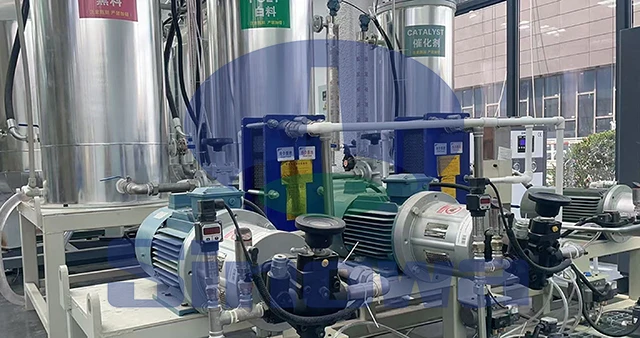
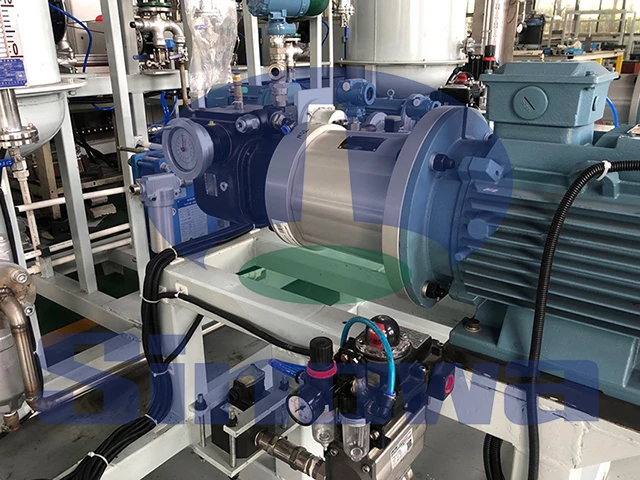
All piping, mixing and circulation circuits of the Sinowa high-performance polyurethane foaming machine are designed for high-pressure operation. This avoids high/low-pressure shock during transitions between standby and production and reduces delays in raw-material discharge.
Core components—including metering pumps, flowmeters, valves, and pressure/temperature sensors—are sourced from leading international mainstream brands, providing quality consistent with advanced international equipment.
A combination of electrical control logic and a compact hydraulic system, together with sensor monitoring of the sealing condition, helps prevent mixing-head blockage and enables cleaning-free operation.
The injection-pressure regulating mechanisms on both sides of the mixing head incorporate automatic air-spring adjustment. Combined with an automatic pneumatic pressure-regulating valve and PLC control, the mixing pressure can be set and adjusted online from the HMI without stopping production.
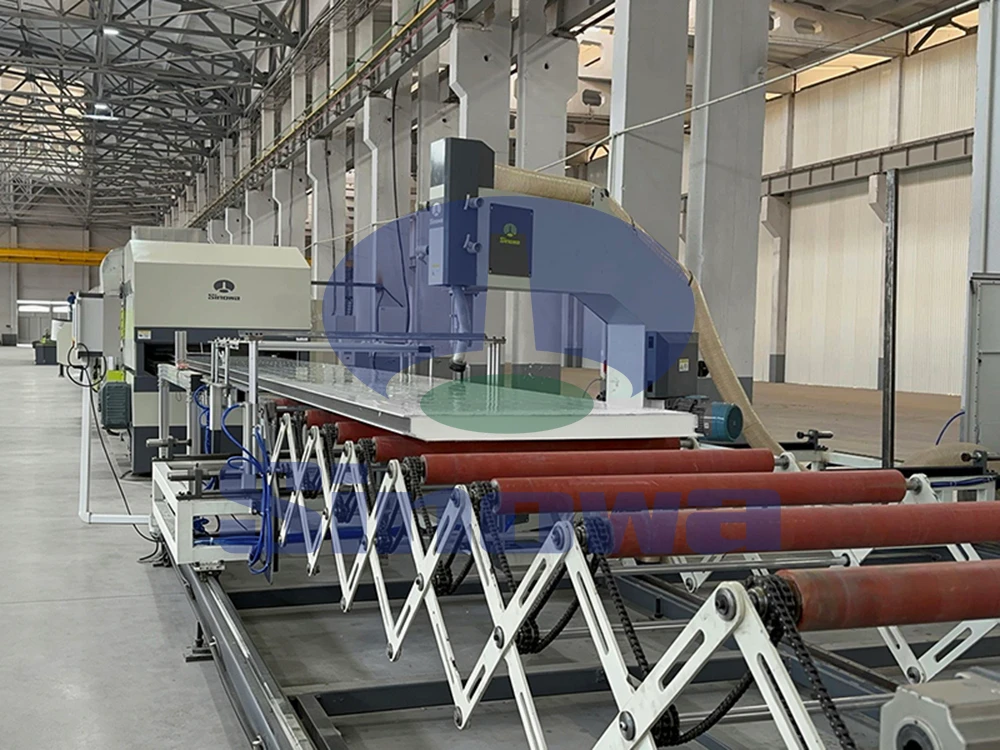
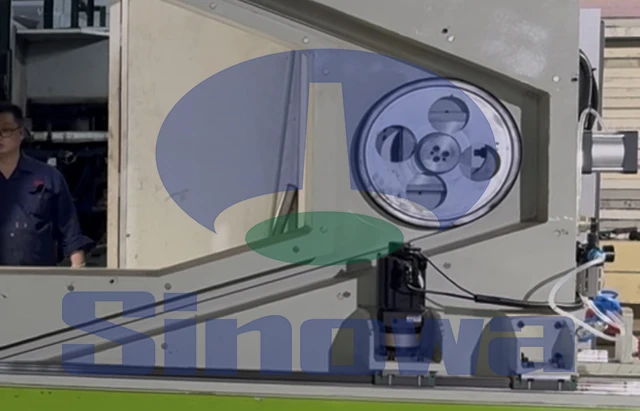
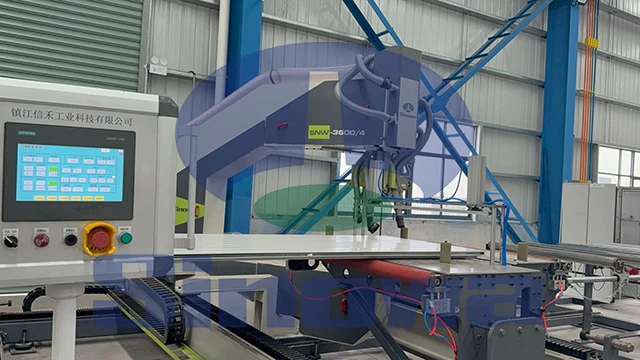
The saw frame and traveling base of the cutting system are CNC-machined. In particular, the band-saw frame is precision-machined to maintain accurate coplanarity of the drive wheels and prevent blade tracking or derailment.
The specially designed drive pulleys incorporate an edge step, while the pulley geometry avoids contact with the saw teeth. This prevents damage to the rubber contact surface and extends service life.
The Sinowa cutting machine uses a one-direction cutting concept to avoid repeated twisting and fatigue damage of the band-saw blade. Blade service life can exceed 400 cutting cycles, significantly outperforming the average level of comparable systems.
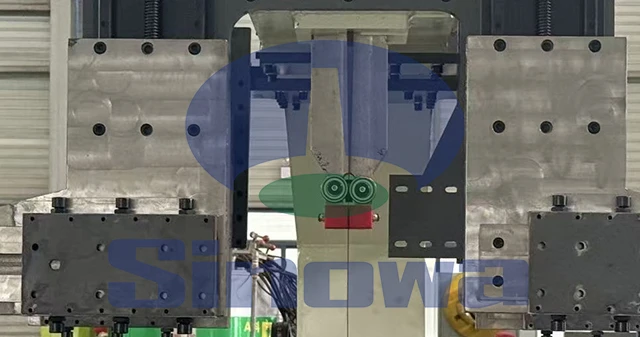
The specially designed saw-blade guiding mechanism combines bearings with guide blocks made from special wear-resistant material. CNC manufacturing ensures high assembly accuracy. An air-cooling and blow-off system cools the blade and helps prevent metal burrs or cutting dust from being carried into the drive pulleys.
A combined valve system with pilot control is used for saw-blade tensioning. It allows rapid pressure release for blade replacement and convenient tension adjustment by air pressure, while helping prevent blade loosening in the event of air-supply loss.
The cutting system is equipped with an automatic burr-grinding unit using a specially designed grinding wheel and a high-speed direct-drive motor. A remotely controlled vertical adjustment mechanism sets the grinding depth.
The servo-controlled lifting system for cutting the overlapped panel-head area uses a high-power, high-speed direct-drive circular saw. The saw automatically raises and lowers according to the cutting program to meet the one-direction cutting requirement, and cutting depth can be precisely set on the HMI.
Sinowa combines advanced engineering concepts with efficient manufacturing capabilities to deliver highly competitive and cost-effective complete production solutions to customers worldwide.
Sinowa is committed to providing customers worldwide with high-performance, highly reliable continuous sandwich panel production solutions that deliver excellent long-term investment value.
| PRODUCTION TYPE | PU | PIR | PHENOLIC | |||
|---|---|---|---|---|---|---|
| PRODUCTION USE | INSULATION PANEL | DOCORATIVE PANEL | ||||
| SURFACE OF SHEET | ALUMINUM FOIL | NON-WOVEN FABRIC | PAPER | NAKED | ||
| PRODUCT THICKNESS | 10m--- 200mm | |||||
| PRODUCTION SPEED | 3.0m---25m |
|---|---|
| FOAMING METHOD | TWO OR MULTI COMPONENTS FOAMING |
| FOAMING AGENT | PENTANE OR 141B |
| LENGTH OF LINE | 45m—100m CUSTOMER OPTIONAL |
Sinowa delivers full-turnkey solutions for continuous PU/PIR sandwich panel production lines, backed by our self-developed proprietary engineering technologies.
We cover every stage of the project with one-stop comprehensive services, including:
Our full-process professional service guarantees stable, long-term, and efficient production operation, while enabling customers to achieve consistent, high-quality sandwich panel outputs and maximize project benefits.
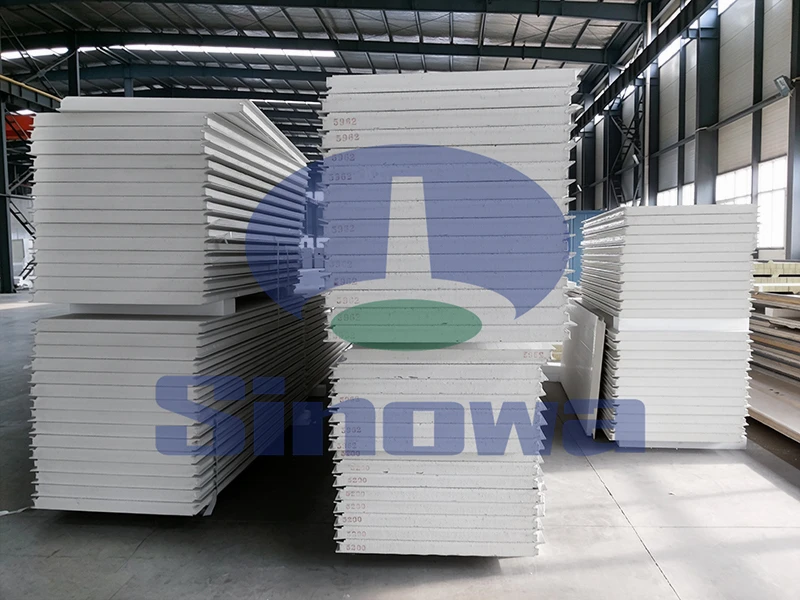
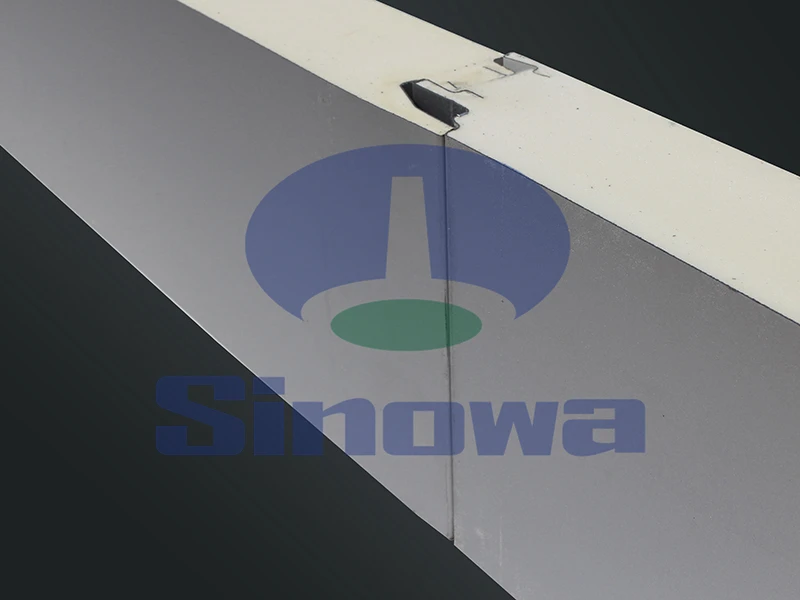
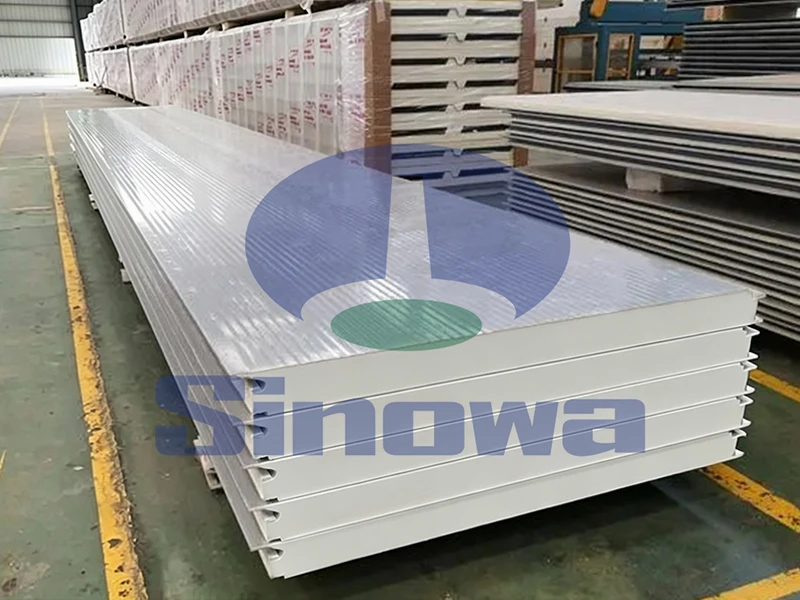
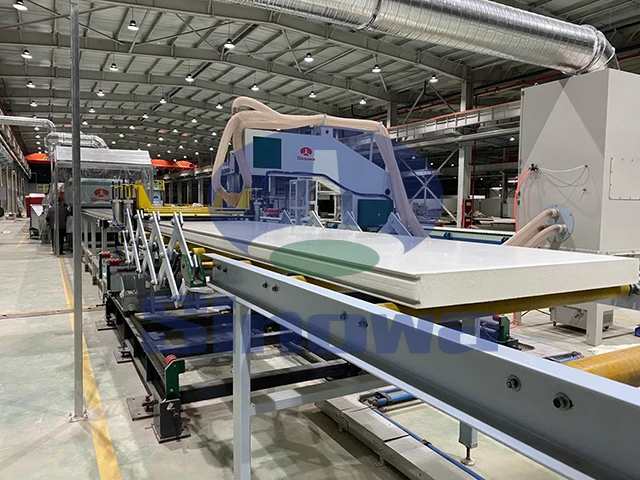
Polyurethane sandwich panel production lines manufacture diversified insulated panels with rigid PUR and PIR foam cores. These lightweight, high-insulation panels include wall and roof specifications. They are widely applied in prefabricated buildings, cold storage warehouses, clean rooms and food processing facilities for efficient thermal preservation and structural protection.
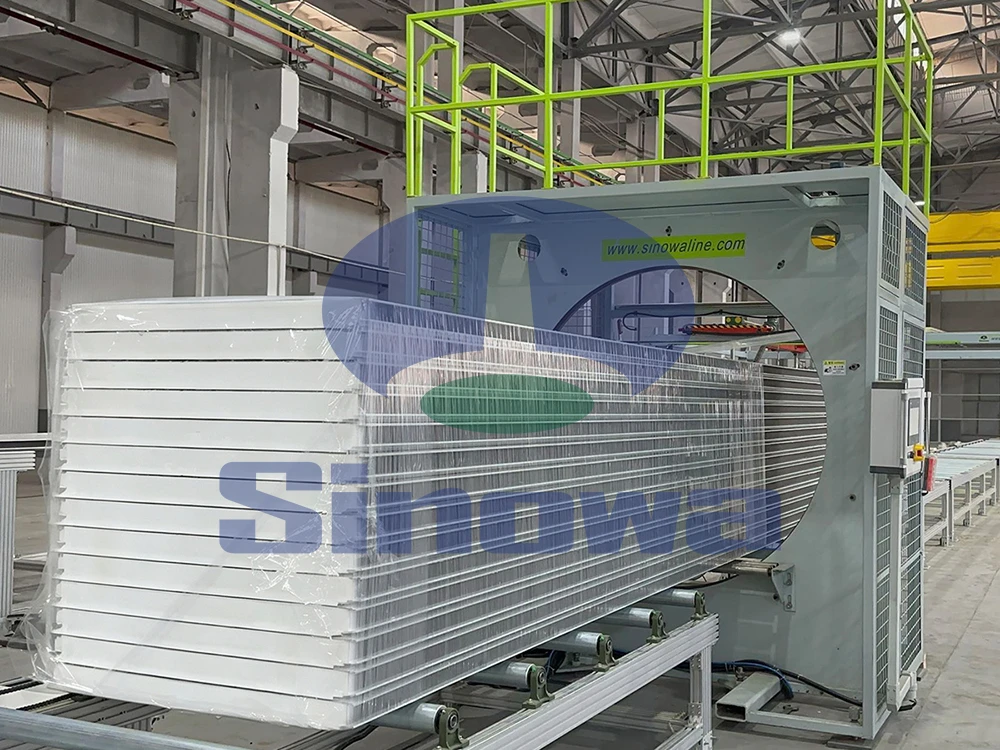
The automated PU sandwich panel manufacturing line supports continuous production, delivering uniform, sturdy panels with fine thermal insulation and stable structural performance efficiently.





Precision Engineering · Intelligent Manufacturing · Optimized Investment
Any Questins About Continuous Sandwich Panel Production Lines
Email us with inquiries or use our contact infomations